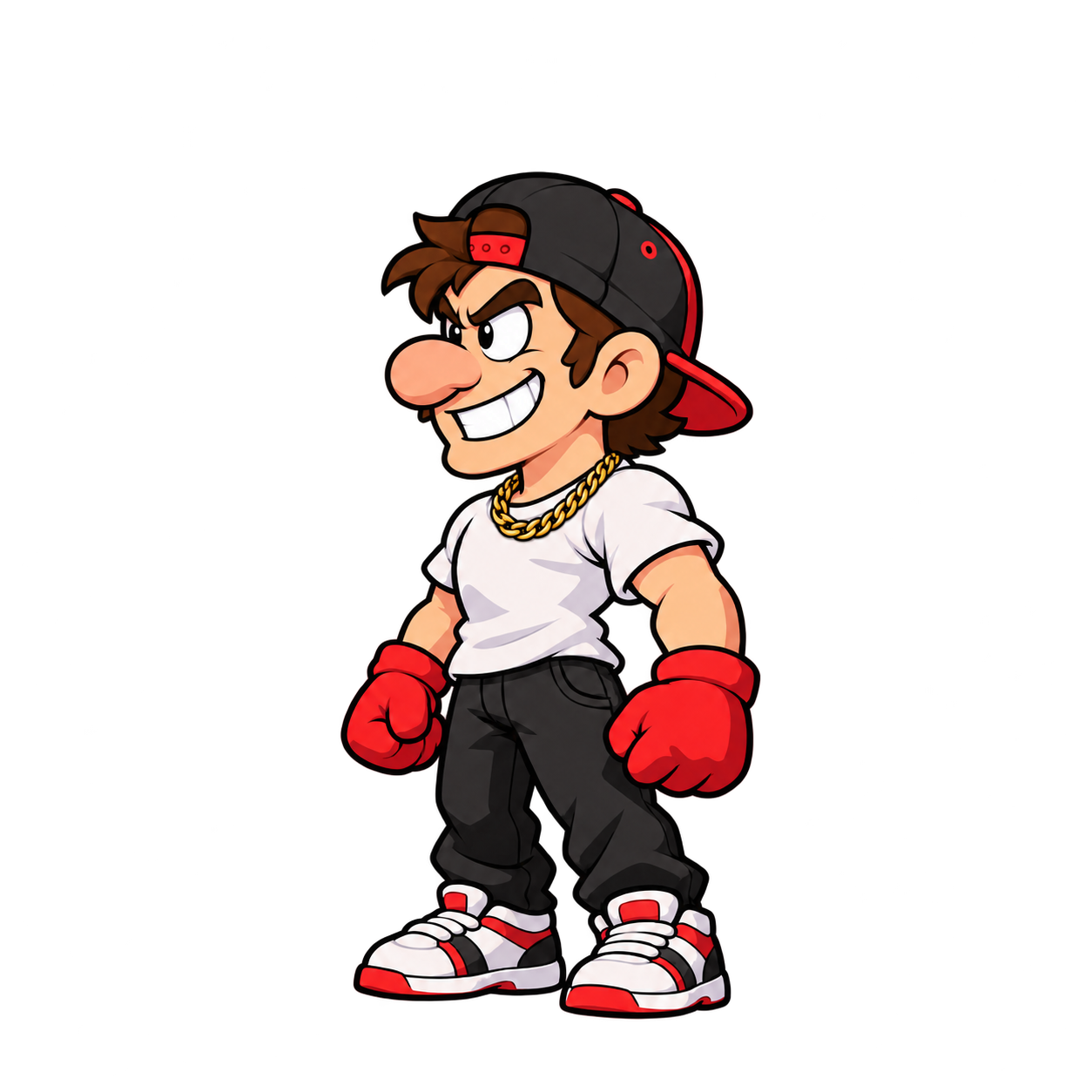
Reviewing the supplied test recording made the next animation problems easier to see. The original run cycle repeated similar limb silhouettes, while carrying, turning and reactions often relied on temporary poses. Changing a global frame rate would not solve those drawing and playback gaps.
The new pass adds 32 drawings across four atlases. The active set now selects 74 distinct poses over 34 playback sequences, with the earlier artwork preserved. The run distinguishes contact, compression, passing and flight, and the new handling and transition banks add carrying, aim and throw preparation, fast shaking, belly jumps, landing, turning, hurt and recovery.
Better motion without different physics
Walk and run keep a shared, distance-driven phase through acceleration instead of restarting the cycle at the speed-state boundary. There is no extra artificial bob transform. Landing, turning and recovery are short visual transitions driven by simulation events; they do not lock controls or change collisions, health, pickups or action timing.
The renderer now prefers an exact authored action alias when one exists. Fast shake uses its faster native action clock, and per-frame facing metadata handles a hurt drawing that faces the other way. Unsupported special actions still remain clearly marked rather than pretending the character has a complete move set.
This pass was checked with artwork inspection and deterministic tests of the shipped scripts and actual PNGs. No additional live browser playthrough is claimed for the final pass. The animation viewer and the same stage tester remain the quickest way to compare the new poses with the preserved Wario reference.