FROM THE DISC. INTO NEW SOURCE.
A second life.
One system at a time.
An editable Java foundation for rebuilding Symphony of the Night from your original disc. Original assets, native game logic, a modern HTML5 canvas.
Alucard reconstruction playtest
Loading Java buildOriginal Castle Entrance art, room bounds and object placements are decoded from your disc. Java handles movement, basic terrain, adjoining-room transitions, bats, floor zombies, candles, small and large hearts, gold drops, subweapon pickup and exchange, and the original dagger, axe, Holy Water, Cross, Bible, Stopwatch, Rebound Stone, Vibhuti and Agunea attacks. The scene selector offers 26 rooms; Recovered assets lets you inspect all 28 entries. Player collision, combat and entity loading still use test rules. Other enemies, remaining subweapon cosmetics, full inventory, scripted connectors, doors, exits to other stages, audio and the campaign remain unfinished.
RECOVERED, NOT REDRAWN
Art from the original bytes.
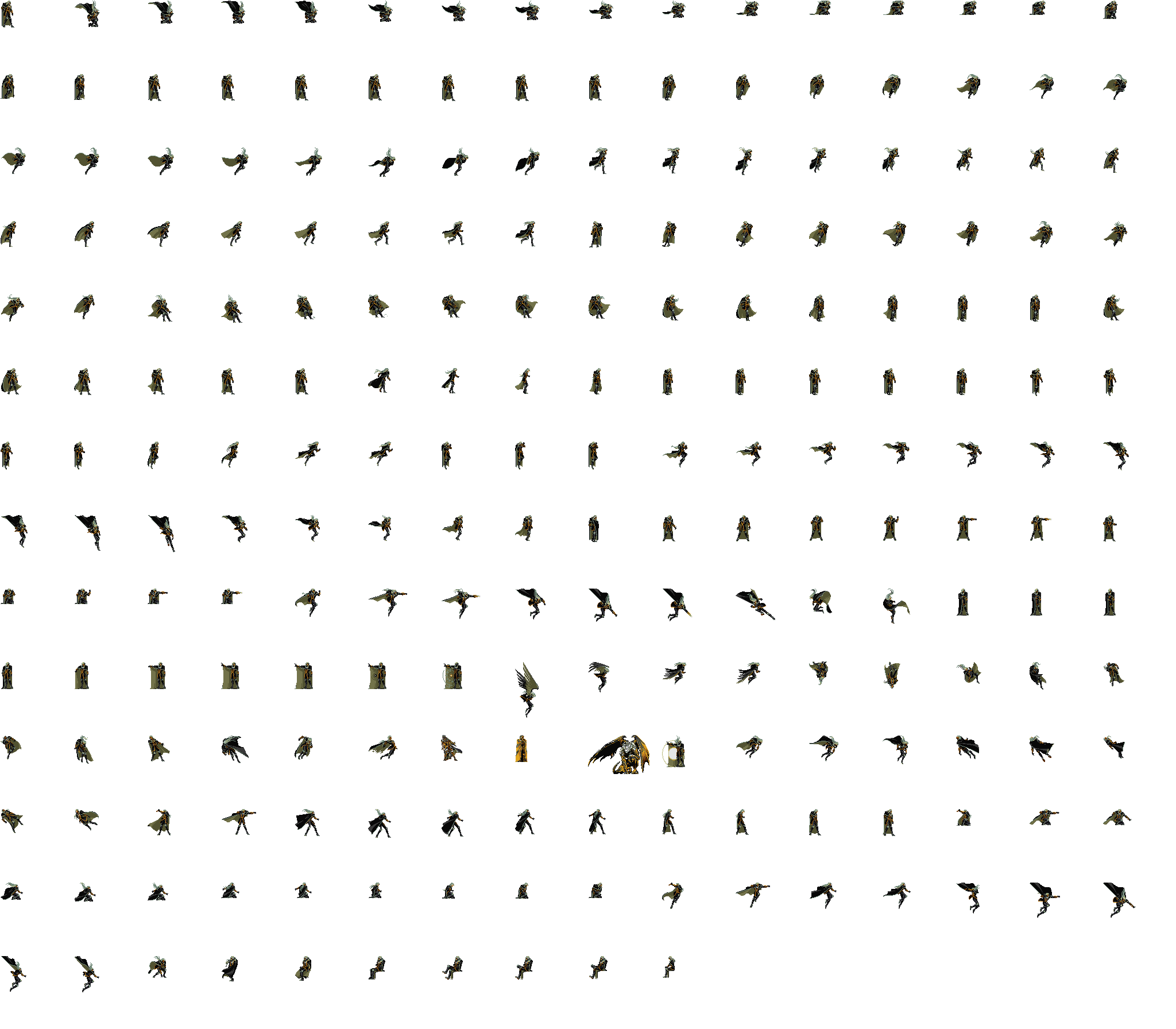
Character pixels, palettes, dimensions and pivots are decoded from your image. Inspect a frame or play a recovered animation.
Loading asset metadata…
View the complete sprite atlas
Inspect recovered Castle Entrance room layers
Inspect original room objects and enemy placements
| Object | Position | Parameters | Binary offset | Java port |
|---|
These are original layout records. A recovered record does not mean its behavior is implemented.
Download original placement data ↓View recovered bat sprites
View recovered zombie sprites and palettes
View recovered candles and small hearts
View recovered large hearts and gold
View recovered subweapon pickups
View the recovered dagger projectile
The original 8×24 indexed texture is mapped onto the original rotating quad. Its source palette, additive trail and fading pixels come from the preserved disc. Canvas color rounding approximates the original GPU.
View the recovered axe projectile
The original 24×40 texture switches between two recovered palettes. Four tinted quads form its trail; Java controls the exact primitive corners and timing. Canvas blending and edge sampling approximate the original GPU.
Inspect the original Agunea artwork
The source effect uses a fading purple line and forty textured strips per ribbon. Its six texture slices, normal palette and white flash palette are decoded from the disc. Java controls attachment, steering, timing and color fade. Full battle, cosmetic helpers and global PlayStation rendering remain unfinished.

Inspect the original Vibhuti drawing data
The source effect uses twelve untextured white tiles and a zero-width control. Java preserves their velocity, landing corrections and timing. Only the first eight particles rotate through the attack hitbox. Canvas draws their original opaque colors; complete PlayStation collision, battle and global drawing integration remain unfinished.
Inspect the original Rebound Stone drawing data
The original attack uses sixteen untextured line records and eight gray 2×2 tiles per burst. Java preserves their geometry, source colors, timing and reflections. Canvas displays these source primitives with additive blending; exact PlayStation line pixel coverage and global drawing integration remain unfinished.
View the recovered Stopwatch artwork
The disc supplies the 16×24 clock, its white flash palette, countdown digits and ring texture. Java controls their timing and selective enemy freeze. The ring retains its outer gray and inner blue gradient. Canvas sampling, color interpolation and global drawing integration approximate the original GPU.

View the recovered Bible artwork
The disc supplies the original 16×24 book and 16×16 trail textures. Java controls the orbit, flight and seven fade colors; Canvas presents their recovered palettes. The original US orbit uses an uninitialized value, which this reconstruction sets to zero for repeatable testing.

View the recovered Cross artwork
The disc supplies all three mesh palettes, the original 3D face and UV tables, a one-row beam strip and six blue-particle clips. Java controls rotation, projection, visibility and timing. Canvas sampling and global drawing integration remain approximations.
View the recovered Holy Water flame texture
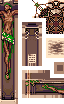
Eight original texture slices animate across four warped flame bands. Java controls the source timing, geometry, colors and intermittent hitbox. The bottle uses its original tiny sprite; glass shards use original colored triangles. Their tiny rising green particles retain the original color, motion and short lifetime. Canvas blending and edge sampling approximate the original GPU.
Download original Holy Water data ↓ · Download original green particle data ↓
View the recovered candle break effect
Eight original small explosion frames. Java controls their timing, upward movement and lifetime. Original sounds and other effect types remain unfinished.
BINARY → FILES → SOURCE
Explore the preserved disc.
The Java disc tools recover ISO files from raw 2352-byte sectors. This explorer shows the same inventory and can extract a file from your local BIN.
Checking for the local archive…
| ISO path | Bytes | Sector |
|---|
Extraction reads the selected disc’s data track without executing it. File verification is available through verify.cmd and the editable Java tools in your local package.
A FAITHFUL REBUILD NEEDS EVIDENCE
The reconstruction ledger.
The complete game is the goal. This ledger distinguishes recovered original data, implemented tests, and systems still awaiting a Java port.
A starting point for the original logic.
The Symphony of the Night decompilation project supports this US release and documents original functions and data. References are pinned to a commit in the local project. This Java laboratory does not yet reproduce the full game’s behavior.